What is Enthinkment Circle?

Enthinkment Circle is a Think Tank with Heart—a space where organizational leaders, family members, coaches, and scholars gather to break free from the echo chambers of "Tamaraland" through deep, reflective thinking and quantum storytelling.

Founded by David Michael Boje, Professor Emeritus at New Mexico State University and Invited Visiting Professor at Fisk University, our circle brings together the philosophical depth of Louis Ralph Pondy's enthinkment with Martin Heidegger's meditative mindfulness and the practical tools of TogetherStorying Decision Tree Software Version 5.0.

What We Do

We meet weekly on Zoom (Tuesdays 2-3:30 PM Mountain) and monthly for deeper TogetherStorying Sprints (Next: Friday February 6, 2026 at 10AM Mountain / 9AM Pacific / 11AM Central / Noon Eastern) to:

  • Question our own thinking and the thinking paths of our organizations and families
  • Navigate Tamaraland's fragmented realities where multiple stories unfold simultaneously
  • Practice Heidegger's "Besinnung" (mindfulness as meditative questioning)
  • Use TogetherStorying Version 5.0 with 3.6M+ pathway configurations to restory stuck narratives
  • Create "clearings" where authentic choice becomes possible

Who Should Join: Leaders navigating organizational transformation, families working through stuck stories, coaches developing their practice, scholars exploring narrative theory, and anyone seeking to move from reactive "enactment" to reflective "enthinkment."

How Boje's Conflict Spiral De-Escalation Works

Dr. David Michael Boje will listen to all sides of the conflict, taking notes and respecting confidentiality. Then David will assemble a team of 2 to 7 conflict management coaches to conduct a series of assessments using his original Decision Tree Software (versions 1.0 to 5.0) to get individual input from participants in the conflict.

Learn More at Storying.Site →

The 6-Step Process

1. Initial Listening & Assessment

Dr. Boje meets with all sides individually, taking detailed notes while maintaining strict confidentiality. This creates a safe space for honest expression before any joint sessions.

2. Team Assembly

A specialized team of 2-7 conflict management coaches is assembled, drawing from volunteers in the Insight community, local universities and colleges, and Boje's network of trained coaches and consultants.

3. Individual Assessments

Each participant completes assessments using Boje's Decision Tree Software (versions 1.0-5.0), providing structured input on their experience, metaphysical orientations, and desired outcomes.

4. Separate Coaching Sessions

Virtual and/or on-the-ground workshops are conducted first with each side to the conflict, creating space for processing, reflection, and preparation for dialogue.

5. Joint Workshops

After respective coaching sessions, facilitated workshops bring everyone together for 'together-listening', finding common ground, and co-creating new possibilities.

6. Pre/Post Testing & Measurement

Using the decision tree software, pretest and posttest measurements assess shifts in 'storying', 'together-listening', ability to find common ground, and mutual understanding. For larger populations, representative samples are used.

The Intervention Framework

Breathing Life Into Your Wheel of Life

The integrative approach breathes life back into relationships trapped in conflict spirals. When we combine the diagnostic clarity of Pondy's model with the strategic wisdom of the 7 Bs and the practical steps of restorying, genuine healing becomes possible.

1. Wheel of Life Mapping

Wheel of Life - TogetherStorying

Used eight life dimensions (family, friends, community, work, health, learning, play, spirituality) to prevent conflict from colonizing a person's entire existence. The goal: recognize conflicts as "a flat spot on one spoke, not the entire wheel."

Result: Immediate perspective shift—the conflict becomes localized, not totalizing.

2. In-the-Moment Storying Scripts

Concrete language for real-time boundary-setting during meetings and exchanges. Shifts from global attack to specific behavior, names boundaries without counterattacking.

Result: Transformed reactive defensiveness into intentional dignity protection.

3. Seven Bs of Antenarrative

Beneath: Unmask implied rules
Before: Gather earlier fragments when collaboration worked
Bets: Frame small experiments
Being: Track breath and body during live confrontations
Becoming: Challenge deficit labels with "Little Wow Moments"
Between: Notice relational dynamics
Beyond: Connect to larger meaning and spiritual dignity

Result: Shifted from trapped victim to active agent with multiple strategic choices.

4. Seven Restorying Steps

1. Characterize Best Self: Identified high-point collaboration scenes
2. Externalize the Problem: Name the pattern—not identity, but interaction
3. Sympathize: Acknowledge legitimate needs the pattern protected
4. Revise T-E-B: Map Thoughts → Emotions → Beliefs
5. Capture Little Wow Moments: Collect micro-wins where dignity remained intact
6. Rehistorize: Write "Another Story" using only strengths
7. Publicize & Embody: Create personal manifesto and embodiment practice

5. True Storytelling Principles

1. You yourself must be true and prepare the energy and effort for a sustainable future
2. True storytelling makes spaces that respect the stories already there
3. You must create stories with a clear plot, creating direction and helping people prioritize
4. You must have timing
5. You must be able to help stories on their way and be open to experiment
6. You must consider staging, including scenography and artefacts
7. You must reflect on the stories and how they create value

💰 Financing the Intervention

Financing happens through enrolling volunteers from the Insight community, local universities and colleges, and from Boje's network of coaches and consultants. Funds are raised to cover expenses (airfare, meals, hotel, workshop materials, etc.) through Boje and Rosile's certified non-profit PerView Inc. [501(c)(3)].

Explore Full Methodology at Storying.Site →

Available virtually via Zoom or in-person at your location. From single sessions to multi-week engagements tailored to your community's needs.

Bring Dr. Boje to Your Community →

Serving communities, cities, organizations, and agencies across North America and beyond

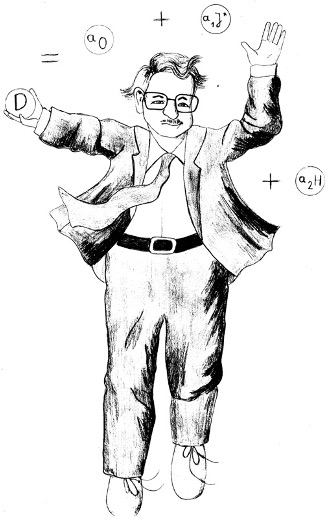
Leaping Lou Pondy
Drawing by Sabine Trafimow

Enthinkment vs Enactment: The Path from Doing to Being

Enactment is about sensing the environment—what Pondy called "prehension"—and responding with action. It's a mechanistic, reactive process that focuses on external data and immediate responses.

Enthinkment, by contrast, is a mode of being that transcends mere reaction. It involves deep, reflective thinking—what Heidegger called "meditative thinking"—where we engage with the world not just through our senses but through our entire being. Enthinkment is about questioning our assumptions, listening to the narratives that shape us, and opening ourselves to new possibilities.

It's the difference between reacting to a crisis and deeply understanding its roots; between managing symptoms and transforming systems; between living on autopilot and living with intention.

Most importantly, enthinkment is action. It's not passive contemplation but active engagement with reality in a way that creates the "clearing" where authentic choice becomes possible.

Pondy's Conflict Model: A Framework for Enthinkment in Action

The Spiraling Escalating Episodes of Family, Community, & Organizational Conflict

Dr. Boje
              will come to your commiunity and heal confiicts

Louis Pondy's groundbreaking 1966 model revealed that organizational and community conflicts aren't isolated events—they're episodes in an ongoing cycle. From latent conditions beneath the surface, through perceived and felt stages, to manifest conflict and its aftermath, each episode feeds into the next.

In their 2023 book "The management thought of Louis R. Pondy: Reclaiming the enthinkment path" (Routledge), Boje, D. M. & Saylors, R. transformed Pondy's model from a simple cycle into an escalating spiral. This critical insight reveals that without intervention, conflicts don't just repeat—they intensify. Each unresolved episode feeds more toxic energy into the next, creating a downward spiral of deteriorating relationships and increasing harm.

However, Boje and Saylors also showed the hopeful flip side: with skillful conflict management using 'storying' and 'restorying' (reauthoring) practices, the spiral can be reversed. Through the 7 Bs of antenarrative and the 7 steps of restorying, communities and organizations can de-escalate conflicts and co-create peaceful, dignified outcomes. The spiral can go up as well as down.

But Pondy's original model was missing something critical: a pathway out of the spiral—the enthinkment loop.

Explore the Full Model at Storying.Site →

The Five Stages of Conflict Episodes

1. Latent Conflict

Beneath-the-surface conditions: unspoken rules, power imbalances, scarce resources, value differences. These create the fertile ground where conflict can germinate. This is the "Beneath" realm where the seeds of future episodes are planted.

2. Perceived Conflict

Parties become aware that their goals, values, or interests appear incompatible. Different people perceive the situation through different lenses—these stories are not the same. This is where antenarrative fragments begin to compete for dominance.

3. Felt Conflict

Emotional engagement: hurt, anger, fear, frustration, defensiveness. The conflict moves from the head to the heart, becoming personally charged and harder to resolve rationally. This is the "Being" stage where emotions colonize the body and mind.

4. Manifest Conflict

Observable behavior: arguments, withdrawal, aggression, sabotage. The conflict becomes visible to others in the "Between" space of relationships. This is where intervention typically happens—but often too late, unless enthinkment practices are deployed.

5. Conflict Aftermath

The outcome feeds back into the system. If resolved well through restorying, relationships strengthen and the spiral de-escalates. If suppressed or poorly handled, resentment builds and feeds the next cycle's latent conditions—the spiral escalates. This is where "Becoming" either moves toward dignity or deficit identities.

Deep Dive into Conflict Transformation at Storying.Site →

Ready to Begin Healing Conflicts in Your Community?

Dr. Boje is available for community interventions — virtually via Zoom or in-person at your location.

One conversation could change everything.

Request Dr. Boje for Your Community →

Heidegger's Besinnung (Mindfulness as Meditative Questioning)

Our practice draws heavily on Heidegger's concept of Besinnung—often translated as "mindfulness" but more accurately understood as meditative questioning of one's own thinking. This is not the contemporary mindfulness of stress reduction, but a rigorous philosophical practice of:

  • Questioning the ground beneath our assumptions (what Heidegger called "Ab-ground")
  • Listening to the unspoken in organizational and family narratives
  • Creating clearings where new possibilities can emerge
  • Moving from calculative thinking (problem-solving) to meditative thinking (dwelling with complexity)

Origin of Enthinkment

The term "enthinkment" was born from a casual conversation between Louis Ralph Pondy and Karl Weick while walking through the cornfields of Illinois. Pondy suggested "enthinkment" as a concept for new ways of thinking, contrasting with Weick's well-known theory of "enactment," where organizational reality is shaped through the senses.

Despite being initially dismissed as a jest, David Boje sees "enthinkment" as having profound implications for management theory, not merely as an alternative but as a complementary concept to enactment.

The term "enthinkment" was coined by Louis Ralph Pondy, a pioneering scholar in organizational theory and one of the most original thinkers in management studies. Pondy only used the word "Enthinkment" once, made a joke about it, and never uttered it again. He died in 1987. Two years ago, we formed 'Enthinkment Circle' and take up the long path of thinking, called Enthinkment. It is a path of questioning one's own thinking and the thinking paths of organizations.

Publications

The Foundational Tamaraland Research (1995)

Tamaraland diagram with annotation

Boje, D. M. (1995). Stories of the storytelling organization: A postmodern analysis of Disney as "Tamara-Land." Academy of Management Journal, 38(4), 997–1035.

This groundbreaking 1995 research introduced the concept of "Tamaraland"—named after the Los Angeles play Tamara where audience members must choose which of twelve simultaneously occurring scenes to follow. Boje's ethnographic study of Disneyland revealed organizations as fragmented, polyphonic performances where multiple stories unfold simultaneously in different spaces, with no single observer able to see the whole. This foundational work laid the groundwork for understanding organizational echo chambers and the need for Version 5.0's navigation of simultaneous realities.

Download Original Paper (PDF)
The Management Thought of Louis Pondy book cover

The Management Thought of Louis Pondy

David M. Boje and Rohny Saylors, recognizing the value of "enthinkment," embarked on a thorough review of Pondy's extensive writings, lectures, and presentations. His aim was to illuminate "enthinkment" as a pivotal shift in understanding organizational dynamics, emphasizing reflective thinking over just sensory interaction with the environment.

David and Rohny Saylors detail this exploration, connecting "enthinkment" with broader concepts like "true storytelling" and "quantum storytelling," suggesting that these frameworks can offer a deeper, more nuanced understanding of organizational behavior.

Louis R. Pondy was a leading management and organizational studies scholar whose work on open systems helped launch and define the future of the field. This book offers an assessment of Pondy's contribution through critical reflection on the relationship between conflict theory and "beyond open systems" in beginning the use of the word 'enthinkment' which is a deep questioning of Being, as we develop it.

Full Citation:
Boje, D. M.; Saylors, R. (2023). The management thought of Louis R. Pondy: Reclaiming the enthinkment path. Routledge.

Read Sample (72 Pages) Purchase on Amazon

Authors: David M. Boje is Professor Emeritus in Management at New Mexico State University, and Professor at Aalborg University Business School, Denmark. Rohny Saylors is Assistant Professor in entrepreneurship at Washington State University.

Enthinkment and Ab-ground: A New Foundation for Organizational Inquiry

Antenarrative Inquiry Beyond Grounded Theory: Heidegger, Pondy, and the Fourth Wave

By David Boje, Ph.D. - June 20, 2025

For several decades, my work in organizational storytelling has sought to move beyond the linear, mechanistic, and representational logics that dominate traditional management research. This essay explores enthinkment—a mode of thinking that is emergent, reflexive, and dialogical, one that listens as much as it speaks, following the dynamic complexity of organizational meaning-making as it unfolds in real time.

Read Full Essay

Ready for Deeper Transformation?

Beyond our open weekly and monthly circles, we offer intensive cohort work for those seeking sustained transformation of family or organizational systems.

Inner Circle Cohort

8-Week Deep Coaching Program • Fridays 1-2:30 PM Mountain

Work personally with David Boje in a small group (maximum 8 participants) using TogetherStorying Version 5.0 to:

  • Map your family or organizational system's story architecture
  • Identify and break through echo chambers
  • Navigate quantum entanglements between personal, family, and organizational narratives
  • Develop sustained restorying practices
  • Build your own enthinkment circle facilitation skills

Investment: Sliding scale $500-$1200 • Full scholarships available for veterans and first responders through PerView Inc.

Apply for Inner Circle Cohort